

is hunger games based on a true story
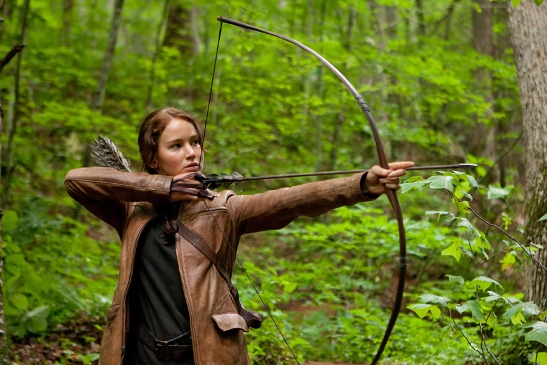 Eerily, TheHunger Games took on a perspective more closely resembling reality than fiction.I first heard of The Hunger Games after the movie was released but had no idea what it was about. I wondered why all the craze.
How can you miss the 6404 5‑star average reviews in Amazon. If you're a writer, you can't ignore that. I immediately ordered it having no idea what it was about. Anything that popular must be doing something right and there's likely something to learn from it–at least from a writing/promotional perspective.
I still hadn't cracked the book (how do you say that with a Kindle?), but then I read an email from my friend and estate planning attorney Martha Hartney.
I enjoy Martha's writings because we often share similar views on raising kids. We both question motives behind those who make rules for out kids' education. Sometimes, you are better off if you do not listen to authority, or at the very least, you ought to consider questioning it.
Enter Martha Hartney…
For months, my son had been telling me to read it. Then, in hushed, conspiratorial "you've got to read this book" tones, every mom I knew said I should. By last winter, every teen, tween, and mom I knew had. I caved when my other son begged me to too.
Boom. I was hooked. Just like that. I inhaled it more than read it. Three weeks, three books.
Suzanne Collins' work has haunted me ever since. How is it a book about kids killing kids has gotten under my skin so deeply, and seemingly everyone's else's too? What makes it so compelling, so perfect for this moment in our history?
It must strike a cord deep within us.
A mining town—dusty, dirty kids just eking by, resorting to living off the land, base, vile, grubby. District 12—home of the beloved heroine Katniss Everdeen, where parents are in every way powerless to make a better life for their kids. A geographically removed, hyper-privileged ruling class calling all the shots; so much so that they force their citizens to offer up their kids for sacrifice. A sacrifice to ensure the continued supply of materials for their cushy lives. To remind the nation of their fragile grasp on their humanity.
The country is divided into 12 districts, each having a primary product or service benefitting the ruling class—the absurdly posh living in the "Capital." Of course, I was not surprised that the Capital of post-apocalyptic America known as "Panem" is nestled in my own beloved Rockies. I can almost picture an uber-privileged, conservative, militaristic upper class rising out of the ashes of a self-inflicted climatic upheaval not too far from of our military bases and Academy near Colorado Springs. It makes sense that Collins would locate the ruling class in a hard-to-reach, easy-to-defend mountain fortress. After all, America did just that when placing NORAD in Cheyenne Mountain.
Even more resonant, though, is how all of Panem regards its most vulnerable citizens—its children—as leverage to ensure obedience, silence, and conformity.
Panem's children, from 12 to 18, are at the mercy of the state. Prepared from birth for a voiceless existence, without any power to object to the "reaping" of one among them to kill or be killed and every adult petrified to speak out against it.
Once a firestorm of uprising is started in Panem, though, our heroine finds that the answer, the other end of the socio-economic ideology is little better. From oppressive capitalism in which every cost of business is off-loaded (externalized) so that the rich can enjoy cheap products without ever having to see how they're made, to a culturally uniform, drab, obedient communistic "liberation," Katniss' options are so limited as to leave her little choice but madness.
How different—how similar—is Panem really from our own culture, right here and now?
We're soenthralled byThe Hunger Games because it echoes of ourselves on anarchetypal level.

The way families are managed has changed in the last 50 years. Today's parents have a harder time raising their children the way they see fit in ways that our parents never could have dreamed of. Yesterday's parents, my parents, were the kings and queens of their domain. What they said went, and they meant what they said, and boy did we know it. Okay, I wouldn't raise my kids the way I was raised, but I always felt my parents were in charge of me–were the final authority over me–and no one else. And if push came to shove in a family of ten kids, as it often did, my parents would have stood up for me and my siblings.
Today's parents have a harder time raising children without an increased involvement of the state. It's harder now to raise kids who are robust, vibrant, questioning rebels–in a country created by rebels. Today, children must be obedient to the State (with a capital S) to a greater degree than to their own parents, as expressed primarily through educational institutions whose authority has been growing, and creeping into the realm of the family more and more with each passing year.
Kids that don't "fit the mold" that schools and society now require are medicated into submission where in the past, many were able to work or play off their energy throughout the day. They must sit for six quietly for six hours a day or more. That's not new or unusual really, but now they come home to an hour or four of homework. I don't know about you, but I hardly ever had homework and it was rarely more than 45 minutes. Perhaps I'm aging myself. Where school used to be where children would train their brains to create, invent, build; today they're taught to be workers–drones that do not question, that can sit for vast stretches of time without complaint. They're fed the pink slim the rest of us won't eat, sugar, caffeine, and unpronounceable, barely edible foods and expected to perform poorly nourished. They're taught to dishonor their bodies by rushing when they need to rest, to sit when they need to run, to be quiet, compliant, obedient little sponges.
All that wouldn't be so bad or even that different from when we were kids, except that kidsintuit that they are being prepared not for lives of greatness, but for jobs in factories or cubes where their hands will ache, their backs will give out, their faces droop and creases take their seat in their furrowed brows.
They know this because they see it in their parents. In us.
Sons watch their fathers slog off to work each day, sit inside buildings filled with florescent glare rather than warm, radiant sunlight; rub their eyes after staring at a computer screen for 10 hours a day. Daughters see their mothers get up, run two loads of laundry, fix lunches, do their hair, answer email, clean the kitchen, then go off to their jobs and come home with hunched shoulders, sighing deeply—then getting up to do it all over again. Kids may be living in McMansions but they sense their parents are collapsing under mounting debt and a loss of a passion to live and create.
Kids know that many of us went to college. They know that merely getting a degree does not guarantee a better life or joy. Not anymore anyway. They understand that they're expected to conform, to sit quietly and not bother the teacher, to answer questions correctly rather than creatively, to assemble rather than to invent. And they sense, rightly, that they're being prepared to serve the great monster—the 1% whose lives look so fucking fun on television—or to die trying.
Is it any wonder at all that so many children, boys mainly, seek an alternate reality in video games where they can move, run, shoot, hunt, explore? Why are we surprised that our sons have learned to hide out in a virtual world that is much more alive than the world we now offer them? Frankly, I'm not surprised at all.
On the other hand, children whose parents choose to not let them go to public school—not to participate in societal preparation of kids—are ostracized, treated as deviant, and sometimes even targeted by an ever-more powerful nanny-state that steps in when parents do their job differently than what the government (read: the Department of Education) says they should.
For instance, I have an "unschooling" friend. She is one of the most involved mothers I know. She spends every waking hour with her kids, not teaching them any particular curriculum. They'd be in late elementary and middle school were it not for the fact that they've never set foot in a public school. Yet these kids read and do math almost as well as other kids. And what they may not have in skill, they have in gobs and gobs of real world experience—they have been entrepreneurs, town mayors, strategy game champions, jewelers, actors, and inventors. Yet, if she were ever to get "on the radar" of the state, she would surely have to answer to a judge for lifelong truancy and perhaps risk having her kids taken away from her or her kids be forced into a public school.
No state has validated "un-schooling" as a teaching method. Frankly, I wouldn't do it because I'd worry too much that my kids wouldn't have the practical skills they need. But I find it difficult to challenge when un-schoolers and home-schoolers seem to get such good results. My point is that even a child who is home-schooled must adhere to a state curriculum and prove they meet the minimum standards of learning at each age level—even if the parent is highly participatory and wants to educate their child in a different way. Each child must be enrolled in something, somewhere. Tracked and tested according to the state's learning schedule with little or no accommodation for differing learning styles, strengths or weaknesses.
Just a few more examples of an expanding state involvement in the family:
- Colorado's Department of Education recently announced sweeping new regulations over every form of education with new rules that prohibit long-standing, well-respected techniques used in Montessori and Waldorf schooling. In hyper-regulating private schools, the state will squeeze out competition for funding by driving out of business schools that use these techniques, thereby channeling additional funds into the state's educational coffers.
- Schools advise parents that they must vaccinate their kids, but parents are never told of the risks nor that it is may well be unconstitutional to require their children be vaccinated without exception. Professionals who speak against blind obedience to the growing "Vaccination Nation" are blackballed, or worse, subjected to professional discipline, civil and criminal charges.
- When parents choose alternate medical treatments for their kids rather than expose them to potentially damaging pharmaceuticals, they're hauled into court and face having their children taken away from them.
- When parents grow their own wholesome, untainted, local foods, they're hunted, stalked, and their home-based herds of livestock seized and slaughtered because they dared to deviate from the corporate food structure.
It is an express goal of every public educational system to create workers for the future. Plain and simple–a workforce prepared for service. That's been that way for oh, what, 75 years or so. What's alarming to me is how much more interest the state has in parenting, and how much harder it is to stand up as parents to advocate for what we believe is best for our kids. And–howaware kids are of that. Deeper and deeper the state dives into regulating families, in forming a work force that will do as it's told, resonating of Panem. State vision and mission statements frequently qualify the "worker production" goal in terms of helping children be successful in a global market. But the increasing authority of the state to involve itself in the family and in the everyday life of the child seems to have had the opposite effect—of creating subdued minds not prepared to innovate, invent, adapt to rapidly changing events.
Not one to be an alarmist most of the time, I'm actually pretty nervous. All the more so because my children are growing aware of the social, legal, consumerist climate in which they live. I've been challenged that the state has always been involved in schooling and parenting; that nothing's changed at all. But I think it has. Our culture has changed, our values have changed. Sometimes that's in awesome ways (super liberal that I am). But in other ways, it's anything but awesome. It's scary.

Worth fighting' for? I think so.
Photos via Martha Hartney
is hunger games based on a true story
Source: https://www.chuckrylant.com/hunger-games-based-true-story/
Posted by: galveztookins.blogspot.com
0 Response to "is hunger games based on a true story"
Post a Comment